


A clear morning in Los Angeles can turn to rain before the drive home, and a dusty stretch of road can leave a film on your crown and brim. Protecting your hat from rain and dust doesn’t mean keeping it tucked away. A few careful habits can help you wear it often and keep it in good condition.
Whether rain will affect your hat depends on its material, construction, and finish. Dust care varies, too: loose particles are different from dirt worked into the surface. Gentle handling and the maker’s care instructions are more useful than a one-size-fits-all fix.
This guide covers practical ways to reduce exposure, remove loose dust, respond to a wet hat, and store it between wears. You’ll learn when to carry your hat instead of wearing it, how to blot moisture and air-dry it, and when to stop rather than risk changing its surface. A simple routine can help keep a well-made hat in regular rotation without treating it as untouchable.
Key Takeaways
- Protecting your hat from rain and dust starts with its material and the maker’s care guidance.
- After rain, blot moisture gently and let the hat dry naturally before storing it.
- Use a dust-removal method suited to the hat’s surface, and don’t scrub embedded dirt or stains.
- A quick after-wear check and clean, dry storage can help keep a hat in good shape.
- Thoughtful care lets you wear a favorite hat with confidence without treating it as untouchable.
Protecting Your Hat from Rain and Dust Starts Before You Head Out
A favorite hat belongs out in the world, but a little preparation can reduce the chance of rain spotting its surface or dust settling into the brim. Start by finding out what the hat is made of and how it should be handled. Good hat care begins with preparation and continues with gentle handling while you’re out.
Before heading out, take a moment to:
- Check the forecast and consider whether rain or wind could make wearing the hat impractical.
- Handle the hat with clean, dry hands to avoid transferring oils or dirt.
- Bring a suitable way to carry it, or set aside a secure place for it where it won’t be crushed.
These habits can reduce exposure without requiring you to treat or seal every hat. Protecting your hat from rain and dust means making sensible choices for its material, not assuming a product or method will suit every surface.
Check the material and care guidance first
Felt, straw, cotton, and leather can respond differently to moisture and cleaning. Depending on its construction, felt may be vulnerable to changes in shape or surface, straw can be affected by dampness, cotton may absorb moisture, and leather may develop marks. These are possibilities, not universal rules. For a broader introduction to different types of hats and their materials, consider how varied hat construction can be. Before applying a spray or other treatment, follow the maker’s care instructions. Don’t assume any material is waterproof or dustproof.
Prepare for Los Angeles and Topanga outings
Outdoor plans around Los Angeles can take you from paved streets to dusty roads, with wind or changing conditions along the way. If the route or weather makes wearing your hat impractical, carry it securely rather than letting it sit loose in a bag or car. The Busto Signature Topanga Hat story offers an example of a hat connected with life outdoors. A little preparation can help you enjoy the day while taking care of what you’re wearing.
How to Protect a Hat from Rain: A Calm, Step-by-Step Response
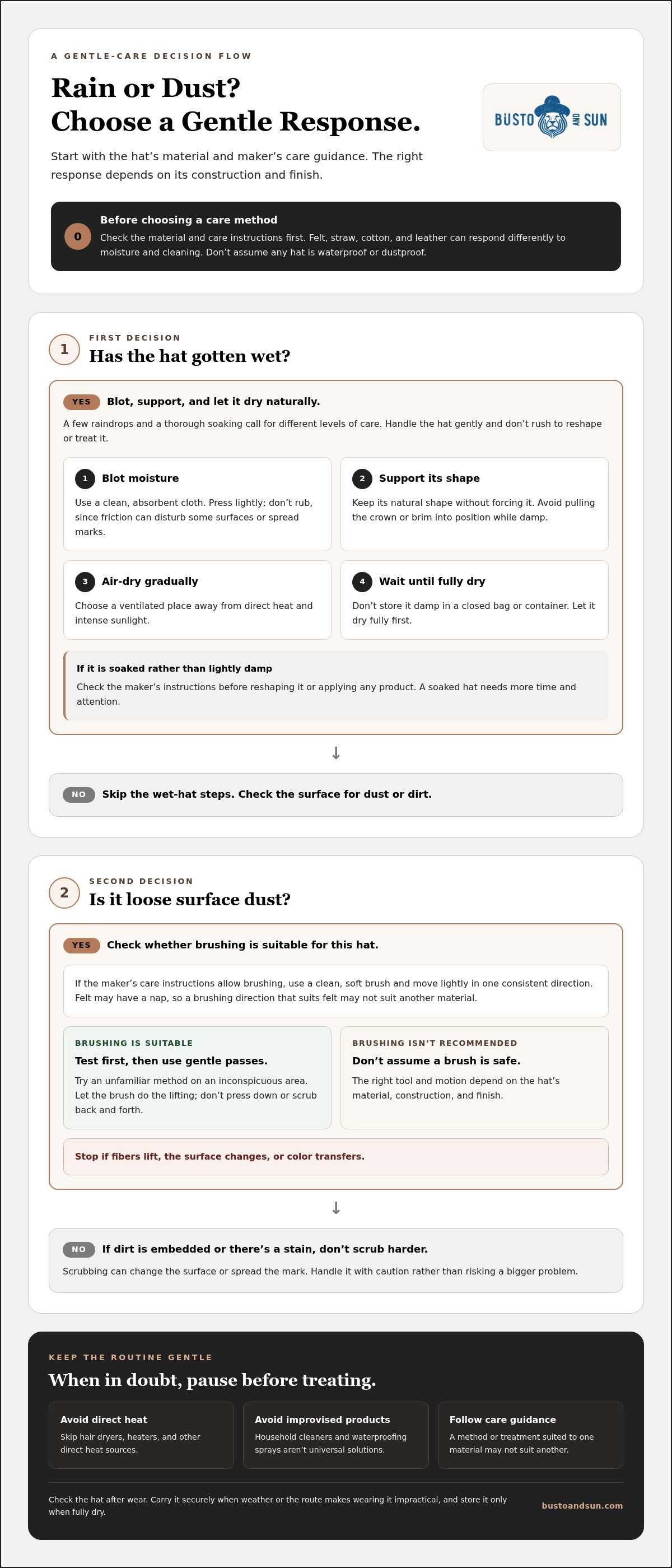
A few raindrops and a thorough soaking call for different levels of care. How a hat responds depends on its material, construction, and finish. If it gets wet, don’t rush to reshape or treat it. Gentle steps give it time to dry without adding friction, heat, or unnecessary strain.
What to do when your hat gets wet
Use a clean, absorbent cloth to blot visible moisture. Press lightly rather than rubbing, since friction can disturb some surfaces or spread marks. Let the hat dry in a ventilated place, away from direct heat and intense sunlight. Check the maker’s instructions before reshaping it or applying any product, especially if it is soaked rather than lightly damp.
As it dries, support its natural shape without forcing it. If the maker recommends a particular way to hold or reshape the hat, follow that guidance. Otherwise, avoid pulling the crown or brim into position while it is damp. Pressing too firmly can put stress on a shape that may be more vulnerable while wet.
Gradual air-drying gives a hat time to release moisture without the concentrated stress that direct heat can place on some materials, finishes, and shapes.
What not to do after rain
Skip the hair dryer, heater, and other direct heat sources. They may affect some materials or finishes, and rapid drying can contribute to unwanted shape changes. Keep the hat out of intense sunlight as it dries, too. Don’t put it away damp in a closed bag or container. Let it dry fully first so moisture isn’t trapped.
Avoid improvised fixes. Household cleaners and waterproofing sprays aren’t universal solutions, and a treatment suited to one material may not suit another. A light mist may leave little moisture to blot, while a soaked hat needs more time and attention. In either case, follow the care guidance rather than assuming the hat can withstand the exposure.
- Blot: Lift moisture with a clean cloth, without rubbing.
- Support: Preserve the shape gently, following the maker’s instructions.
- Air-dry: Choose a ventilated spot away from direct heat and intense sunlight.
- Wait: Make sure the hat is fully dry before storing it.
Careful handling helps keep a handcrafted hat ready for the next stretch of open road. Browse handcrafted hats from Busto & Sun as you consider which piece will accompany your days outdoors.
How to Remove Dust Without Scuffing or Changing Your Hat
Loose surface dust is different from dirt worked into the fibers or a mark that has settled into the finish. First identify what you’re dealing with. Loose dust may lift with a suitable gentle tool; embedded dirt or a stain calls for more caution. Scrubbing harder can change the surface or spread the mark, turning a small concern into a bigger one.
A gentle routine for loose dust
Check the maker’s care instructions before choosing a brush or other tool. If brushing is suitable, use a clean, soft brush and move lightly in one consistent direction instead of scrubbing back and forth. Felt may have a nap, so a brushing direction that suits felt may not suit another material. Test an unfamiliar method on an inconspicuous area first. Stop if fibers lift, the surface changes, or color transfers.
Use a steady hand and let the tool do the lifting. Work across the dusty area in gentle passes rather than pressing down. If the care instructions don’t recommend brushing, don’t assume a soft-bristled brush is safe just because it works on another hat. The right tool and motion depend on the material, construction, and finish.
- Check: Confirm that brushing is appropriate for the hat.
- Test: Try the method discreetly before treating a visible area.
- Pause: Stop at the first sign of color transfer or surface change.
When dust becomes a mark or stain
If dust is embedded or has left a visible mark, don’t reach for water, detergent, or stain remover as a first response. These can affect some materials and finishes, and a treatment that works on one hat may alter another. Avoid vigorous rubbing and unverified home remedies, even if the mark looks small.
Try a gentle, material-appropriate method once. If it doesn’t work, stop. Repeated brushing or rubbing can scuff the surface, disturb fibers, or change the appearance around the mark. Preserving the hat’s condition matters more than forcing an immediate result. Follow the maker’s guidance rather than experimenting with a stronger cleaner.
That restraint is part of protecting your hat from rain and dust: remove what can be lifted safely, and don’t treat every mark as a reason to clean aggressively. Patience can help preserve the hat’s character and surface.
A Simple Storage Routine Keeps Rain and Dust at Bay
A quick check after each outing can make care feel routine rather than like a repair job waiting to happen. Look for moisture or loose dust. Let the hat air out if needed, remove surface dust only with a suitable method, then put it in a clean, dry place. If it is damp, let it dry fully before storage so moisture isn’t trapped.
Storage is part of protecting your hat from rain and dust, and it can also help preserve its form. The hat crown anatomy guide offers a closer look at how a hat’s crown is shaped. Since handling and storage can affect that shape, lift and set your hat down with care instead of grabbing or pressing it casually.
Store a hat so its shape can rest
Choose a stable spot where the crown and brim won’t be compressed by other belongings. The best resting position depends on the hat’s construction and silhouette, so follow the maker’s guidance rather than assuming every hat should sit the same way. Keep it away from damp or dusty areas and direct heat. A clean shelf or suitable hat box can work if it supports the hat without squeezing it.
Choose a place that’s easy to reach without moving other items around, so you can handle the hat less often. Keep the storage area tidy and leave enough room that the brim won’t catch against nearby objects. Thoughtful placement means less chance of pressure or dust building up before the next wear.
Build a small, repeatable care kit
A simple kit keeps gentle upkeep close at hand without encouraging unnecessary treatment. Set aside:
- A clean, absorbent cloth for blotting moisture or handling the hat.
- A clean, soft brush, but only if it suits the material and the maker’s care instructions.
- A designated storage place that keeps the hat clear of household dust and pressure.
Keep these tools clean and separate from household cleaning supplies, which may carry residue or grit. Sprays and specialty products are optional, not universal requirements; use them only when the maker’s guidance supports that choice. More products don’t always mean better care. A clean cloth, a suitable brush, and a reliable place to rest can be enough for a simple routine.
Give a handcrafted hat a place where it can rest between the miles. Explore Busto & Sun hats and find a piece to carry into your next outing.
Make Hat Protection Part of the Way You Wear It
A hat is made to be worn, not kept untouched on a shelf. A practical care routine helps you enjoy it with less worry: carry it securely when weather or wind makes wearing it impractical, and give it gentle attention after exposure to dust or rain. Some days call for a little more care. That’s part of taking a favorite piece along.
Choose a care habit that fits your routine
If you often wear a hat outdoors, make a quick check of conditions part of getting ready. Bring a secure way to carry it when you expect a dusty stretch, strong wind, or rain. If you wear it occasionally, focus on a clean, dry storage place between outings so it’s ready when you are. In either case, let the material and maker’s instructions guide your choice of tools and care steps.
Keep the decision simple: check the care guidance, choose the gentlest suitable action, and stop if the surface changes, fibers lift, or color transfers. Everyday upkeep means careful handling and light attention to loose dust or moisture. It isn’t the same as repair or restoration, and a stubborn mark isn’t a reason to scrub harder or experiment with unverified products.
Keep a crafted hat in your everyday story
The Busto Signature Topanga Hat is one example of Busto & Sun’s handcrafted work, designed and produced in Topanga Canyon. Like any hat, its care depends on its specific material and the maker’s guidance. For a custom-made design, Busto & Sun offers an online hat quiz and in-person appointments for custom fittings.
Protecting your hat from rain and dust doesn’t mean avoiding every forecast or outdoor plan. It means knowing when to wear it, when to carry it, and how to handle it afterward. That steady rhythm lets a well-made hat remain part of ordinary days and memorable miles, without asking you to treat it as untouchable.
Explore handcrafted hats from Busto & Sun and find a piece to make part of your everyday story.
Wear Your Hat Well, Wherever the Day Leads
A little preparation and a gentle touch can make hat care feel like part of getting ready, not a reason to stay indoors. Check the maker’s guidance before choosing a brush or treatment, blot rain rather than rubbing, and let a wet hat air-dry naturally. After each outing, a quick check and a clean, dry place to rest help keep it ready for the next one.
Protecting your hat from rain and dust isn’t about keeping it pristine or untouched. It’s about understanding its material, responding calmly to weather, and stopping if a care method changes the surface. Those simple choices let a favorite hat accompany more of the moments that make it yours.
Busto & Sun creates handcrafted hats in Topanga Canyon, including the Busto Signature Topanga Hat and custom-made hats. Explore handcrafted hats from Busto & Sun and find a piece to take along on your next adventure.
Frequently Asked Questions
Can rain ruin a hat?
Rain can affect a hat, but the result depends on its material, construction, finish, and how wet it gets. A light mist and a prolonged soaking aren’t the same exposure, and no material should be assumed waterproof. If your hat gets wet, blot moisture gently and let it air-dry naturally. Protecting your hat from rain and dust starts with following its maker’s care guidance, not relying on a one-size-fits-all treatment.
How do you dry a hat that got wet in the rain?
Blot visible moisture with a clean, absorbent cloth, pressing gently rather than rubbing. Let the hat dry in a ventilated place away from direct heat and intense sunlight, and don’t store it in a closed bag while damp. Support its shape only as the maker’s instructions allow. Avoid forcing the crown or brim into position. Natural air-drying is a sensible approach for hats whose materials or finishes may respond poorly to heat.
How do you get dust off a hat without damaging it?
First decide whether the dust is loose or embedded. If the maker’s instructions allow brushing, use a clean, soft brush with light, consistent strokes suited to the material. Test an unfamiliar method in an inconspicuous spot, then stop if fibers lift, color transfers, or the surface changes. Avoid vigorous rubbing, water, and household cleaners as universal fixes. In Los Angeles, checking your hat after dusty outdoor outings can help you notice loose dust early.
Can you wear a felt hat in the rain?
Whether a felt hat can handle rain depends on its construction, finish, and maker’s instructions. Don’t assume felt is waterproof, even if a product is described as water-repellent; such treatments don’t necessarily protect against heavy or prolonged rain. If the forecast looks uncertain, carrying the hat securely can limit exposure. If it gets wet, blot it gently and air-dry it away from direct heat before putting it away.
What is the best way to store a hat to keep dust off?
Store a hat in a clean, dry place where dust can’t settle easily and where other items won’t crush its crown or brim. A suitable hat box or clear shelf may work, provided it accommodates the hat without pressure. Follow the maker’s guidance on its resting position, since different shapes may need different support. Let a damp hat dry fully before storing it, and keep the storage spot away from direct heat.
Should you use waterproofing spray on a hat?
Only use a waterproofing or water-repellent spray if the hat’s maker says it’s suitable for that material and finish. Sprays aren’t universal, and a treatment that works for one hat may alter another. Follow the product directions, including any recommended inconspicuous-area test, and don’t assume a treated hat is fully waterproof. If the care guidance doesn’t support a spray, carrying the hat when rain is likely is a simpler way to limit exposure.
How often should you brush dust off a hat?
There’s no single schedule that suits every hat. Check for loose dust after wearing it in dusty conditions, then brush only if the material’s care instructions allow it. Use a clean, appropriate brush and gentle strokes rather than repeated scrubbing. If the hat looks clean, there’s no need to brush it just to follow a timetable. Pause if the surface changes, fibers lift, or color transfers, and follow the maker’s care guidance.