


What makes the right hat travel case? It is not necessarily the biggest or hardest one. The best fit depends on your hat’s shape and how you travel. A shaped crown or carefully curved brim can be vulnerable in a crowded suitcase, so a case that does not suit the hat may not solve the problem.
You want more than somewhere to stash your hat. You want it to arrive in good shape without adding an impractical piece of luggage. Start with the hat, then think through the journey: where it will sit, how it will be carried, and what might press against it.
This guide explains how to match case shape and structure to your hat, compare a soft bag with a structured case, and decide whether a dedicated carrier suits your routine. You’ll also find practical packing and handling steps. For a travel-minded option, Busto & Sun’s Hatpack pairs a backpack with a dedicated, detachable hat-storage compartment. It offers a way to bring a hat along while keeping it separate from other packed belongings.
Key Takeaways
- Choose a hat travel case by comparing its interior with your hat’s crown and brim shape.
- Match the case to your journey, packing method, and preferred way to carry it, not just its appearance.
- Weigh the flexibility and packed space of a soft bag against the form of a structured case.
- Position your hat carefully and follow the case maker’s instructions for how it should sit inside.
- The Busto & Sun Hatpack pairs a backpack with a dedicated, detachable hat-storage compartment.
Why a Hat Travel Case Matters When You Take Your Hat on the Road
A hat travel case is a dedicated container or carrier that keeps a hat separate and supports it more carefully during a journey. A shaped hat has contours that can change under pressure: a crown can be squeezed, and a brim can bend or lose its intended curve. Before packing, consider where pressure could land and whether the hat has enough room to sit naturally.
People have carried hats as distinct belongings for generations. For a glimpse into the history of the hat box, you can see how hats came to have their own way of travelling. The basic question still applies: how will your hat sit, and what might press against it along the way?
What can happen to a hat in ordinary luggage?
Belongings shift when a suitcase is lifted, stacked, or moved. Shoes, toiletry cases, and tightly rolled clothing can press against a crown or brim. Friction can rub the hat’s surface, and uneven pressure can change the look of a structured shape. A dedicated case helps you carry a hat separately, but it is not a promise against every kind of damage. Where you place the case and what you pack around it still matter.
When does a dedicated hat case make sense?
Consider the whole trip, not only the moment you pack. Separate storage may be useful on a long journey with transfers, crowded luggage, or frequent bag handling. It may also suit a cherished hat, a carefully shaped style, or a hat you plan to wear when you arrive. For a short, simple outing with an easily replaceable accessory, a separate case may be more than you need.
Your everyday habits matter, too. If you travel light and keep your belongings close, a dedicated carrier may fit naturally into your routine. If you mostly wear a hat around Los Angeles and only carry it briefly between stops, a separate case could feel like one more thing to manage. Choose based on how you actually travel, not out of fear. A case is one part of careful handling, alongside where you place the hat and what you pack beside it.
How to Choose a Hat Travel Case Around Your Hat and Your Trip
Start with the hat, then choose a case that gives its shape room and suits your journey. A case that looks spacious may still be awkward for a tall crown or wide brim. Compare the hat with the case interior, and check that the hat can sit as intended without being squeezed against the top, sides, or base.
How should crown and brim shape influence case choice?
Look at the crown, the part that sits over your head, and the brim, the section that extends around it. A structured crown needs enough height and space to avoid pressure from above or the sides. A broad brim needs room to sit without being bent against the case. For a closer look at crown terminology, see this guide to hat crown anatomy.
Some hats also earn their place in a travel bag because they’ll be worn outdoors. If sun coverage is part of the reason you’re bringing yours, explore the sun protection benefits of hats described by The Skin Cancer Foundation. That purpose can help you decide whether a dedicated carrier will make the trip easier.
Which travel habits should guide your decision?
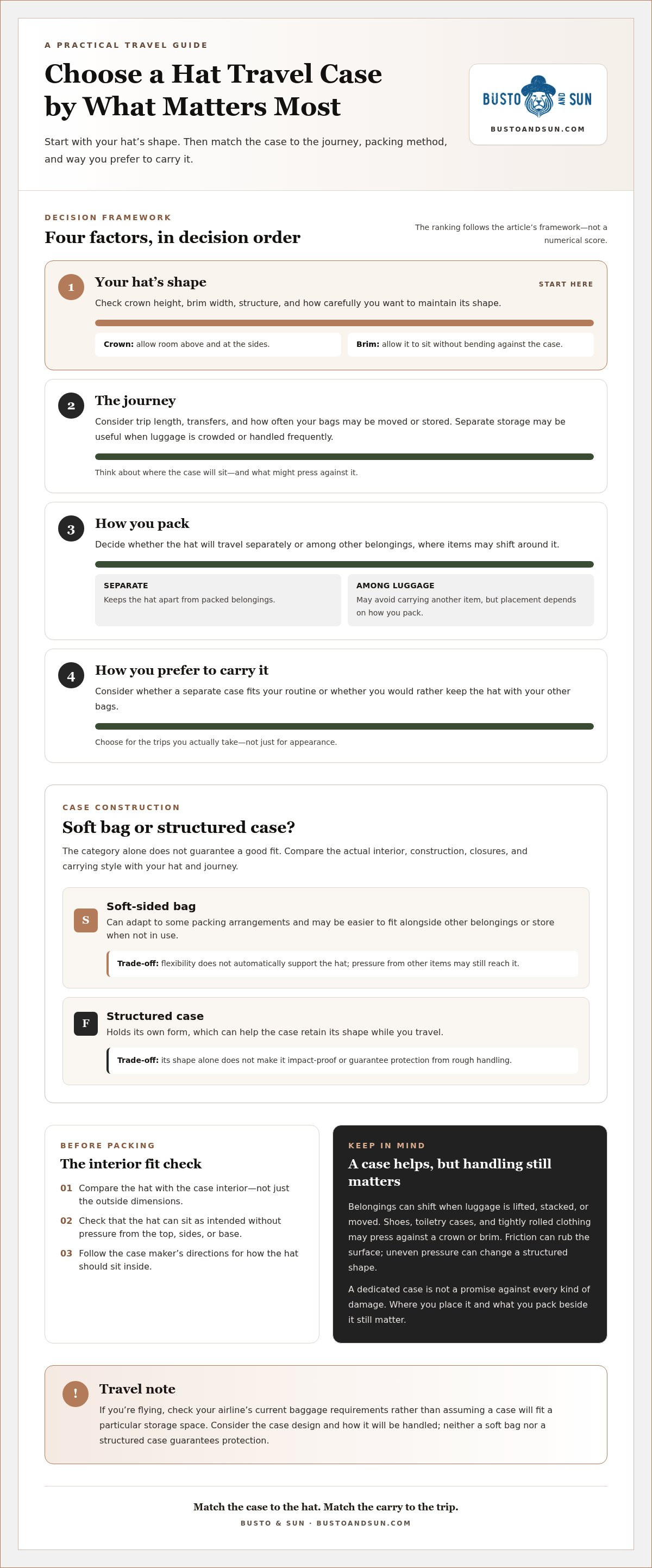
Use this simple framework before choosing a hat travel case:
- Identify the hat. Note its crown height, brim width, structure, and how carefully you want to maintain its shape.
- Map the journey. Think about trip length, transfers, and how often your bags will be moved or stored.
- Choose your packing method. Decide whether the hat will travel separately or among other luggage, where belongings may shift around it.
- Set your carrying preference. Consider whether you’re comfortable carrying a separate case or would rather keep the hat with your other bags.
A separate case can help keep the hat apart from packed belongings. Placing it among other luggage may save you from carrying another item, but leaves its position dependent on how you pack. Neither approach guarantees protection. Consider the case design and how it will be handled, follow the maker’s directions, and avoid putting pressure on the hat. If you’re flying, check your airline’s current baggage requirements instead of assuming a case will fit a particular storage space.
Choose for the journeys you actually take. If a dedicated way to carry your hat fits your routine, explore Busto & Sun’s hat-travel approach as one option.
Soft Bag or Structured Case: What Matters Most for a Hat Travel Case?
A soft-sided bag and a structured case suit different packing needs. A flexible option may be easier to fit alongside other belongings or store when it isn’t in use. A structured case holds its own shape. Neither label tells the whole story: the interior, closures, materials, and carrying style all affect how well a case suits your hat and your journey.
What are the trade-offs between flexible and structured cases?
Soft cases can adapt to some packing arrangements, but flexibility does not automatically mean the hat is well supported. If other belongings press against the bag, the hat may still feel that pressure. Structured cases hold their form, but that alone does not make them impact-proof or guarantee protection from rough handling. Compare the case’s actual construction and interior space, then consider where and how you’ll carry it.
Use the table as a starting point, not a promise about every case in a category:
| Travel situation | Potential advantage | Trade-off |
|---|---|---|
| Limited room among other bags | A flexible case may fit more readily into some packing arrangements. | It may offer less support if other items press against it. |
| Hat travels separately | A structured case maintains its form while being carried. | Its shape may take up more storage space when not in use. |
| Frequent changes between walking and transit | A case suited to your preferred carrying style can make transitions easier. | Size, weight, and handling still depend on the specific design. |
How does a hat’s material affect travel considerations?
Material is another reason to choose thoughtfully. Felt, straw, and other hat materials can differ in texture, structure, and how they respond to pressure or handling. A broad-brimmed straw hat and a structured felt hat may need different interior space or placement, even if their outer shapes look similar. Don’t assume one care method suits every hat. Follow the guidance for your specific hat and the case maker’s directions.
For more context on felt hats, explore this California handmade felt hat guide. It offers a closer look at felt as part of a hat’s character, rather than treating all headwear as interchangeable cargo.
A hat travel case is only useful if it suits your packing habits and the hat it carries. Match the interior to the hat’s shape, weigh flexibility against form, and handle the case carefully whichever style you choose.
How to Pack and Carry a Hat in Its Travel Case
A few deliberate steps can make packing less of a last-minute squeeze. Use the case maker’s directions as your guide, since the right position can vary by design. Then keep the case clear of avoidable pressure as you travel.
What should you do before placing a hat in its case?
Before packing, make sure the hat is clean and dry, and remove loose items from the case that could press against it. Check how the maker intends the hat to sit. If it doesn’t settle into place easily, don’t force it into a tight space. The case or packing arrangement may not suit its shape.
Hat sizing describes how a hat fits the wearer, not necessarily how much room its crown and brim need in a travel case. Still, understanding fit can help you identify the hat you’re packing. Use this hat size chart guide for a clearer sense of how hat sizing relates to fit.
How can you handle the case during the journey?
Follow this simple sequence for a more considered trip:
- Prepare: Set the hat and case on a clear surface, then check the hat and case instructions before packing.
- Place: Set the hat in its intended orientation without bending the brim or pressing on the crown. Close the case only if the hat sits comfortably inside.
- Position: Keep heavy belongings from resting on the case. If it travels among other luggage, place it where it’s less likely to be compressed or shifted around.
- Carry: Choose a separate carrying arrangement or a place among your luggage that suits the trip, your available space, and how often you’ll reach for the hat.
- Check on arrival: Open the case gently, lift the hat without pulling on its brim, and look over its shape before wearing it.
Travel can be unpredictable, so careful packing cannot guarantee against every mark or change in shape. It does give you more control over pressure and handling. For a dedicated way to bring a hat along, explore the Busto and Sun Hatpack as part of your travel planning.
Meet the Busto & Sun Hatpack: A Considered Way to Travel With a Hat
A hat chosen for its character can become part of the places you remember wearing it. Bringing it along is easier when your travel routine makes room for it. The Busto and Sun Hatpack pairs a backpack with a dedicated, detachable hat-storage compartment, giving you a way to carry a hat separately from other belongings. It connects the practical act of packing with the freedom to take a familiar piece on the road.
How does the Hatpack fit into the Busto & Sun story?
Busto & Sun creates handcrafted hats and lifestyle accessories inspired by Italian craftsmanship and the California lifestyle. Its products are designed and produced in Topanga Canyon, bringing a California sensibility to the brand. The Hatpack fits naturally into that range, for carrying a valued hat on a trip beyond Los Angeles or on a day out closer to home.
Think of it as a dedicated way to travel with a hat, not a promise that every hat will suit every case or that travel can never leave a mark. Your hat’s shape, your packing habits, and the case’s instructions still matter. Care starts with choosing thoughtfully and continues with how you pack and carry it.
What is a thoughtful next step before your next trip?
Before setting out, consider your hat’s shape, picture how you’ll travel, choose a case that suits your carrying habits, and pack with care. A little planning can make bringing a well-loved hat feel less like a compromise and more like a natural part of the journey.
If you’re exploring the brand’s hat story, discover the Busto Signature Topanga Hat, a handcrafted piece connected to Busto & Sun’s Topanga roots. Then explore Busto & Sun’s hats and accessories, including the Hatpack, for a considered companion on the journeys ahead.
Bring Your Hat Along With Care
A well-chosen hat travel case starts with the hat itself: its shape, structure, and the space it needs. Match your choice to the way you pack and travel, follow the case maker’s guidance, and keep heavy items from pressing against it. Careful carrying can help you travel with greater confidence, though no case can promise protection from every mishap.
The Busto and Sun Hatpack pairs a backpack with a dedicated, detachable hat-storage compartment. It is part of Busto & Sun’s collection of hats and accessories. The brand designs and produces its products in Topanga Canyon, bringing a California spirit to pieces made for life in motion.
Explore Busto & Sun hats and the Hatpack to find a companion for your journeys. Pack thoughtfully, carry what you love, and let the next mile begin.
Frequently Asked Questions
What is a hat travel case, and what is it used for?
A hat travel case is a dedicated carrier or container for taking a hat on a journey. It helps keep the hat separate from shifting luggage and gives you a considered way to carry a shaped crown or brim. The case’s design and your handling both matter, so it is not a guarantee against damage. For travelers in Los Angeles, Busto & Sun’s Hatpack pairs a backpack with a dedicated, detachable hat-storage compartment.
How do I choose a hat travel case for a wide-brim hat?
Choose a case with enough interior space for the brim to sit without bending or pressing against the sides. Consider the crown’s height and shape, too, so the hat can sit in its intended position. Check the case maker’s instructions and compare the interior with your hat before packing. If the hat feels forced or squeezed, choose a different arrangement rather than trying to make it fit.
Can you put a hat travel case inside a suitcase?
You can place a hat case inside a suitcase if its shape and size fit comfortably and your packing arrangement leaves room around it. Keep shoes and other heavy belongings from resting on top, and avoid wedging the case tightly between items that may shift. A separate case may take up more luggage space, but it helps keep the hat apart from the contents of the suitcase.
Is a structured hat travel case better than a soft one?
Neither style is automatically better. The right choice depends on your hat, trip, and packing habits. A structured case holds its form, while a soft case may fit more readily into some arrangements or be easier to store. Look beyond the category name and consider the actual interior, construction, and carrying method. Neither type guarantees protection from rough handling or every kind of pressure.
How should I pack a hat in a travel case?
Start with a clean, dry hat and remove loose items from the case that could press against it. Follow the case maker’s directions for positioning the hat, and don’t force it into a tight space. Make sure the crown and brim sit comfortably before closing the case. During the journey, keep heavy objects off it. At your destination, lift the hat gently and check its shape before wearing it.
Can a hat travel case fit more than one hat?
Some cases may be designed to carry multiple hats, while others may suit a single hat. Capacity depends on the case’s dimensions and interior arrangement, as well as the shapes of the hats you plan to bring. Don’t stack or crowd hats unless the case maker’s instructions support that arrangement. Each hat needs enough room to sit without pressure on its crown or brim.
Does a hat travel case protect a hat from being crushed?
A case can help separate a hat from other belongings, but it cannot guarantee that the hat won’t be crushed or damaged. The result depends on the case design, how the hat sits inside, what presses against the case, and how it’s handled. Pack thoughtfully, follow the maker’s instructions, and keep heavy luggage from resting on the case whenever practical.