


The wallet that looks most impressive in a product photo may be the one that fits your life least. With artisanal leather wallets, a beautiful grain or rich finish can catch the eye, but neither tells the whole story of how a wallet will feel after years of being opened, carried, and worn. The details matter, as does the way you move through each day.
It’s natural to want a wallet with character, something that feels personal rather than mass-produced. But distinctive style should work with your everyday carry, not against it. A wallet worth choosing balances material, construction, and usefulness, then gathers its own story with time.
In this guide, you’ll learn how to interpret leather descriptions and finishes, assess visible construction, and choose a shape that suits what you carry. You’ll also find ways to look beyond polished product photos. Busto & Sun’s Pocket Ledger Wallet brings the brand’s California perspective to the accessory category. Designed and produced in Topanga Canyon, it offers a local point of reference for Los Angeles readers considering a wallet with personal style. Start with what matters in your own pocket.
Key Takeaways
- Artisanal describes an approach to making, not a guarantee of leather quality; look beyond “handmade” or “small-batch” labels.
- Learn how grain descriptions, tanning terms, and visible construction details can help you assess artisanal leather wallets.
- Compare slim, bifold, and larger-capacity formats against your usual pocket or bag carry and daily essentials.
- Use a simple selection sequence, then care for the leather according to its specific material and finish.
- Explore the Pocket Ledger Wallet as part of Busto & Sun’s Topanga Canyon roots and California perspective.
What Makes Artisanal Leather Wallets Different from Mass-Made Options?
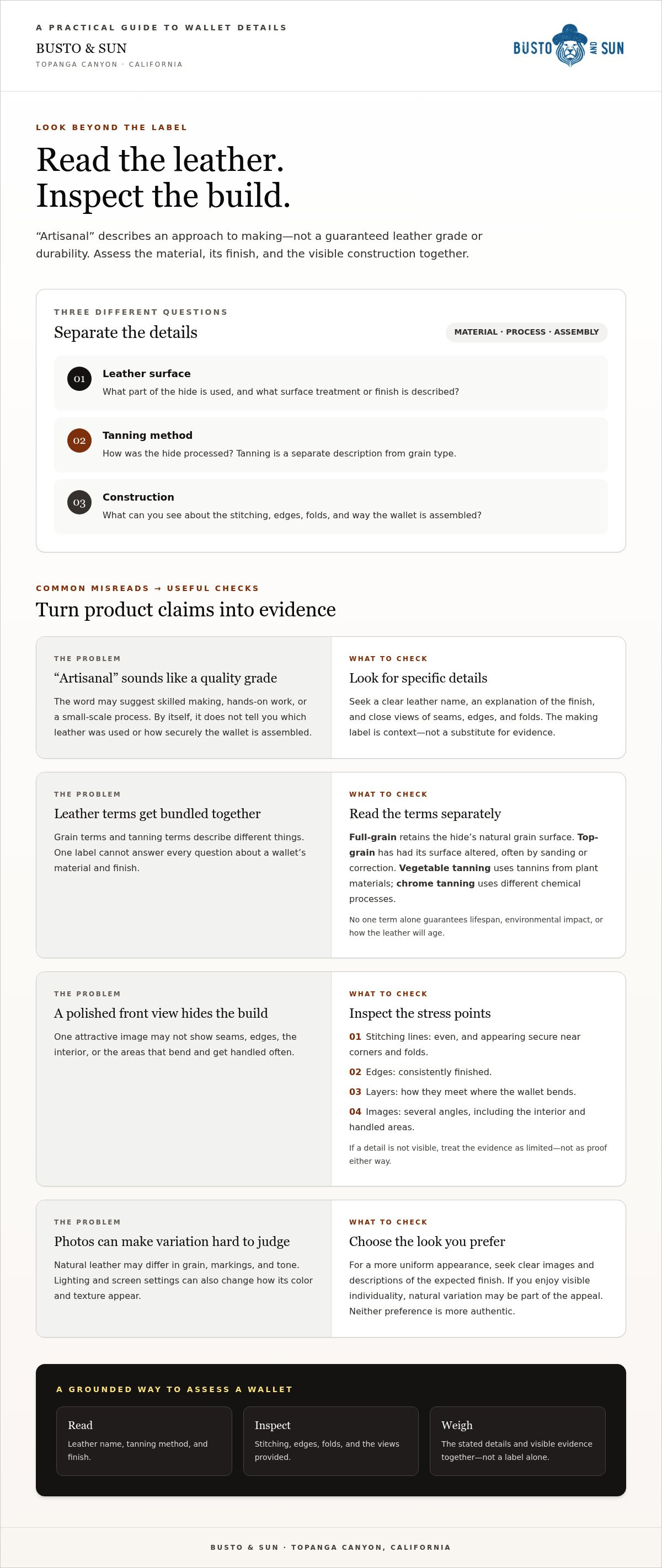
An artisanal leather wallet is shaped by deliberate choices about materials and making. The word describes an approach, not a guaranteed grade of leather or a promise of superior durability. Artisanal leather wallets are defined by the care and decisions behind their making, not by a label alone.
Mass production often aims for consistency across many copies, with the same pattern, finish, and appearance repeated at scale. A maker-led process may involve smaller runs and closer attention to individual pieces, which can bring subtle variation. Neither approach proves quality by itself. The materials and construction matter whether a maker produces a few pieces or many. For crafters looking to source leather bundles for their own projects, learn more about Hab-To Leather House.
What does artisanal mean when describing a leather wallet?
In practical terms, “artisanal” suggests that skilled making and considered choices shape the object. It may point to hands-on work or a small-scale process, but those words alone don’t tell you which leather was used, how it was finished, or how securely the wallet is assembled. Leather craft includes techniques such as shaping, carving, and stamping; this overview of leather crafting techniques offers useful context for the range of work involved.
Look for specifics in the product description and images. Clear material names and close views of seams, edges, and folds tell you more than a broad craft label. Maker attention can influence a finish and its small details, but it doesn’t replace evidence of sound construction.
Why can handmade wallets vary from one piece to another?
Leather comes from a natural material, so its surface can show differences in grain, markings, and tone. The amount of variation in a finished wallet also depends on design choices. A maker may position leather to emphasize its character or favor a more consistent appearance. Photos can hint at these details, but lighting and screen settings may change how color and texture appear.
Decide what look you prefer. If you want a uniform appearance, seek clear images and descriptions of the expected finish. If you enjoy visible individuality, natural variation may be part of the appeal. Neither preference is more authentic. Choose a wallet whose appearance feels right to you and whose stated materials and construction suit your needs.
Leather, Tanning, and Construction: What to Look for in an Artisanal Wallet
A wallet’s material description can sound precise while leaving important questions unanswered. Full-grain and top-grain describe the leather’s surface; vegetable-tanned and chrome-tanned describe methods used to process the hide. Construction is a third consideration. Leather type tells you what part of the hide is used, tanning describes how it’s processed, and construction shows how the wallet is assembled.
How can you interpret leather and tanning descriptions?
Full-grain leather retains the hide’s natural grain surface, while top-grain leather has had its surface altered, often by sanding or correction. These terms describe different material characteristics, but neither tells you everything about a particular wallet. Look for a product description that names the leather clearly and explains any finish or surface treatment. This introduction to judging leather quality can also help you consider qualities such as grain and feel.
Tanning is a separate part of the description. Vegetable tanning uses tannins from plant materials, while other methods, such as chrome tanning, use different chemical processes. The term alone doesn’t guarantee a certain lifespan, environmental impact, or way of aging. Consider what the maker states about the material and finish, then weigh those details against your preferences.
Which construction details signal careful wallet making?
Product photos offer useful clues when they show more than the wallet’s front. Look closely at the stitching: are the lines even, and do they appear secure near corners and folds? Check whether the edges look consistently finished, and notice how layers meet where the wallet bends or gets handled often. These are practical points to assess, not promises about how long the wallet will last.
Clear close-ups and specific descriptions make it easier to judge artisanal leather wallets before buying. A single polished image may hide seams, edges, or the interior, so look for views from several angles and details of the areas that receive regular handling. If a detail isn’t visible, treat the evidence as limited rather than filling the gap with assumptions. Photos can’t reveal every aspect of construction, but they can help you evaluate the product description.
Base your choice on the whole picture: stated leather, tanning method, finish, and visible assembly. To explore a Busto & Sun accessory shaped by its California perspective, view the Pocket Ledger Wallet.
Artisanal Leather Wallets Compared: Match the Design to Your Daily Carry
The right wallet fits your rhythm: what you carry, where you keep it, and how much structure feels comfortable. A maker-led design isn’t automatically a better everyday choice. Shape, stated details, and your habits matter as much as the story behind the craft.
| Format | Often suits | Consider before choosing |
|---|---|---|
| Slim | Minimal daily essentials and low-profile pocket carry | Check that its layout fits the cards and cash you actually use. |
| Bifold | People who prefer a familiar fold and organized sections | Consider how it feels when folded and where you plan to carry it. |
| Larger-capacity | Those who carry more items or usually keep a wallet in a bag | Review the listed layout and dimensions; “larger capacity” alone doesn’t tell you what it holds. |
Is a slim wallet or bifold better for everyday use?
A slim format can feel less obtrusive in a pocket, especially if you carry only a few essentials. Some minimalists even opt to separate cash using sleek accessories from makers like Cudworth to keep pocket bulk to an absolute minimum. A bifold offers a familiar arrangement that some people prefer for sorting what they bring along. Neither is universally more comfortable. Clothing, pocket placement, and whether you sit with the wallet in your pocket all shape the experience.
Before browsing, count the cards and other essentials you use on an ordinary day. Include what you reach for often, not every card you might need once in a while. This quick inventory helps you choose based on real habits instead of an appealing photograph.
How should you judge a wallet from online photographs?
Look for images that show the exterior, interior, edges, and stitching. Close-ups can reveal the layout and how the parts meet, while written dimensions help you understand the wallet’s size. Styled photos may suggest a mood, but they can’t establish measurements, internal layout, or how a wallet feels in your pocket.
Use the written specifications to fill those gaps. Check for dimensions and a clear description of the sections or features shown. If a detail isn’t visible or described, don’t assume it from the styling. With artisanal leather wallets, thoughtful craft can make a piece distinctive, but everyday usefulness depends on how its design fits your carry.
How to Choose and Care for an Artisanal Leather Wallet
A considered choice starts with what you carry, not with a label or a promise of timelessness. Use this sequence to narrow the field: list your daily essentials, choose a format, assess the stated materials, inspect the construction, and consider the care it requires.
What should you decide before buying a leather wallet?
Start with a short inventory of the cards, cash, and other essentials you reach for on an ordinary day. Then decide where you prefer to carry them, such as a front pocket, another pocket, or a bag. Those habits help you decide whether you want a low-profile shape or more organization, and give you a practical way to compare a wallet’s stated design details.
Read the description closely. Look for named materials, dimensions, and clear information about the layout, then review visible seams and edges. Don’t infer a feature from a styled photograph or a broad claim about craftsmanship. For artisanal leather wallets, make your decision by matching stated attributes to your needs and avoiding assumptions about details that aren’t provided.
How do you care for a leather wallet over time?
Leather care depends on the material and its finish, so follow product-specific instructions rather than applying a universal routine. Keep the wallet away from prolonged moisture, and avoid conditioners, cleaners, or other treatments unless the care guidance supports their use. A remedy that suits one finish may not suit another.
Surface changes can be part of a leather item’s life, but patina doesn’t develop identically across materials or patterns of use. Sunlight, handling, and exposure all influence how a wallet looks over time. Follow its care instructions and skip homemade cleaning recipes or unverified treatments that could change the finish.
For a wallet to consider as part of your everyday carry, explore the Pocket Ledger Wallet from Busto & Sun, a brand shaped by Topanga Canyon and a California lifestyle.
The Pocket Ledger Wallet and Busto & Sun’s California Craft Perspective
A wallet is a small object with a place in the daily rhythm of a life. Busto & Sun’s Pocket Ledger Wallet brings the brand’s accessory offering into this guide’s central question: does a wallet suit what you carry, and does its design speak to your personal style? Your everyday needs remain the best measure of fit.
How does the Pocket Ledger Wallet fit the Busto & Sun world?
Busto & Sun’s products are designed and produced in Topanga Canyon, near Los Angeles, within a brand shaped by Italian craft inspiration and a California lifestyle. That setting gives the Pocket Ledger Wallet a place within a broader sensibility of considered accessories and individual expression. The brand context helps explain its perspective; assess a wallet by the details presented for that product.
That distinction matters when exploring artisanal leather wallets. A brand story can help you connect with the intention and perspective behind an object, while the product’s own details help you assess its materials and arrangement. Keep both in view. One speaks to character; the other helps you decide whether a wallet aligns with your carry habits.
What is the next step if this wallet suits your everyday carry?
Return to the essentials you identified earlier. Think about where you carry your wallet, what you expect it to hold, and which material or construction details matter most to you. Then compare those preferences with the information on the product page. Let the product details guide your choice rather than assuming features from a name or the brand’s wider story.
If the Pocket Ledger Wallet feels like a natural fit, take a closer look at the Pocket Ledger Wallet and Busto & Sun accessories. Explore the collection with both practical needs and personal style in mind. The right accessory doesn’t need to announce itself. It simply belongs in the life you carry.
Choose a Wallet That Belongs in Your Everyday
A wallet worth living with is more than a compelling label. Look closely at the stated leather and construction, choose a format around what you actually carry, and follow care guidance suited to its material and finish. These details help you find artisanal leather wallets that fit both your habits and your sense of style.
The Pocket Ledger Wallet is part of Busto & Sun’s accessory offering. The brand’s products are designed and produced in Topanga Canyon, bringing Italian craft inspiration together with a California lifestyle. For Los Angeles readers, that local connection offers context for the brand. Let the wallet’s product details and your everyday needs guide your choice.
Ready to take a closer look? Explore the Pocket Ledger Wallet and discover Busto & Sun. Choose with intention, then let the things you carry become part of your own story.
Frequently Asked Questions
What makes a leather wallet artisanal?
An artisanal leather wallet is shaped by considered making choices, but the label alone doesn’t prove material quality or careful construction. “Handmade” and “small-batch” can describe how an item is produced; they don’t specify the leather, finish, or assembly. Look for clear product details, such as the named material and close views of construction. Maker-led variation may add individuality, but a wallet still needs to suit your preferences and everyday carry.
Is full-grain leather always the best choice for a wallet?
No, full-grain leather isn’t automatically the best choice for every wallet or owner. The term describes leather that retains its natural grain surface, while other leather types may have altered surfaces or different finishes. Consider the wallet’s stated material, construction, appearance, and care guidance together. Choose based on the qualities you value, rather than assuming one label guarantees a particular lifespan, feel, or aging pattern.
How can you tell whether a leather wallet is well made?
Inspect the details shown and described, especially stitching, edges, folds, and areas that will be handled often. Look for clear, close-up images from several angles, and check whether the description explains materials and design. Even neat stitching in a photograph is only one clue, not proof of a wallet’s lifespan. Busto & Sun’s products are designed and produced in Topanga Canyon near Los Angeles, including the Pocket Ledger Wallet.
What is the difference between vegetable-tanned and chrome-tanned leather?
Vegetable-tanned and chrome-tanned leather differ in the tanning methods used to process hides. Vegetable tanning uses tannins from plant materials; chrome tanning uses chromium-based compounds. The method doesn’t tell you everything about the finished leather, and neither term alone establishes quality, environmental impact, or how the wallet will age. Check the product description for the specific tanning information and finish, then consider whether those details align with your preferences and care habits.
How should you care for an artisanal leather wallet?
Follow care instructions for the wallet’s specific leather and finish, since a treatment suitable for one surface may not suit another. Keep leather away from prolonged moisture, and avoid applying cleaners, conditioners, or homemade remedies unless the product guidance supports them. If the wallet gets wet, don’t assume heat or a household treatment is safe. The maker’s care directions are the best starting point for protecting its particular material and finish.
Can a leather wallet develop a patina with everyday use?
Yes, some leather wallets develop changes in color or surface character as they’re handled and used, but the effect varies. Leather type, finish, exposure, and daily habits all influence how a particular wallet changes. Don’t assume every leather develops the same patina, or that a product photo predicts its future appearance. If this matters to you, look for product-specific descriptions and care guidance, and choose a finish whose character you’re comfortable living with.
How do you choose between a slim wallet and a bifold?
Choose by counting what you carry and considering where you keep your wallet. A slim design may suit a few daily essentials and a low-profile pocket feel; a bifold offers a familiar fold and organized sections that some people prefer. Comfort depends on your clothing, carry location, and routine. Compare the wallet’s stated layout and dimensions with your actual needs rather than choosing by style alone.