


The lightest hat isn’t always the coolest one. When you’re finding a hat that doesn't make you hot, an airy crown may sound appealing, but too much mesh can leave you short on shade. And a hat that looks breathable on the rack can still feel stuffy once the sun is high and you’re on the move.
It’s a familiar trade-off: you want comfort, coverage, and a style that feels like you, without having to guess from a fabric label or silhouette alone. Warmth depends on how several details work together, not just on how light a hat feels in your hands.
This guide will help you compare materials, ventilation, fit, and sun exposure so you can make a more informed choice. You’ll learn how to balance airflow and shade, account for weather and activity, and check whether a hat fits comfortably. Whether you’re heading out for a long, bright afternoon or finishing a look with a hat that feels right, a few practical checks can help narrow your options.
Key Takeaways
- For finding a hat that doesn't make you hot, weigh airflow, moisture, fit, activity, and surrounding temperature together.
- Compare cotton, linen, straw, and mesh by their weave and construction, not just the material name.
- Match the hat’s shade coverage and ventilation to your plans, setting, and time in the sun.
- Use a simple try-on checklist: consider conditions, choose coverage, inspect construction, and check the fit.
- Bring comfort priorities and personal style together with a handcrafted Busto & Sun hat, personalized through the online quiz or an in-person fitting.
Why Does a Hat Make You Hot? Start With the Comfort Factors
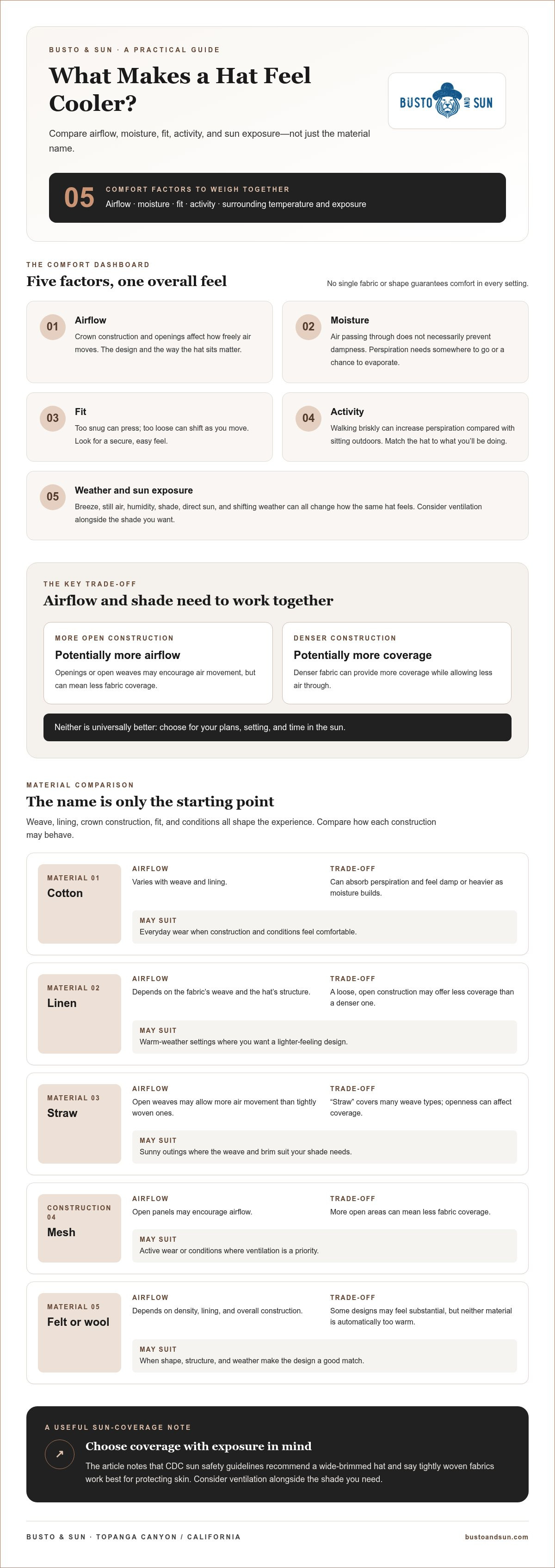
You want shade and a hat that feels like your own, not a crown that turns a sunny afternoon into a stuffy, sweaty one. But choosing a lighter-looking hat alone won’t necessarily solve the problem. Comfort depends on airflow around your head, how perspiration is handled, whether the fit feels right, how active you are, and the conditions around you.
A hat’s comfort comes down to airflow, moisture, fit, activity, and the temperature and exposure around you. These factors work together, so no single material or shape guarantees a cool feel in every setting. A hat that’s comfortable for a shaded stroll may feel very different during an active afternoon in direct sun.
How airflow, sweat, and fit affect hat comfort
The crown’s construction and openings can affect how freely air moves, though the result depends on the design and how the hat sits. Clothing can also hold a layer of air close to the body, acting as insulation, as explained in how clothing traps heat. Openings may encourage air exchange, but airflow and moisture management aren’t the same thing.
Sweat needs somewhere to go or a chance to evaporate. A hat may allow air through and still feel damp if moisture builds up against your head. Fit matters, too. A crown that presses or sits too snugly can become uncomfortable over time, while a loose fit may shift as you move. Look for a secure, easy feel rather than relying on a label or silhouette.
Why sun, activity, and weather change the experience
Sitting outdoors and walking briskly place different demands on a hat. Activity can increase perspiration, while still air may make dampness linger. A breeze may help the hat feel less stuffy. Direct sun adds another source of heat, so consider ventilation alongside the shade you want, not in isolation. If you are preparing for rugged hiking or wilderness outings where breathable clothing and functional supplies are essential, learn more about Eräkolmio for practical outdoor and excursion gear.
Los Angeles makes the contrast easy to picture. On a sunny inland outing, direct exposure and movement may make coverage and airflow especially important. Along the coast, a cooler breeze can change how the same hat feels, though sun exposure still matters. Humidity, shade, and shifting weather can all affect your comfort throughout the day.
That’s why finding a hat that doesn't make you hot starts with the conditions you’ll actually wear it in. Think about the whole experience, not just the fabric or the look.
Which Hat Materials Feel Cooler? Compare Breathability and Trade-Offs
A material label is a starting point, not a verdict. Material names alone can’t predict how cool a hat feels; the weave, lining, crown construction, fit, and conditions all shape the experience. Use the comparison below to narrow your options based on how and where you plan to wear the hat.
| Material or construction | Potential airflow | Practical trade-off | May suit |
|---|---|---|---|
| Cotton | Varies with weave and lining | Can absorb perspiration and feel damp or heavier as moisture builds | Everyday wear when the construction and conditions feel comfortable |
| Linen | Depends on the fabric’s weave and the hat’s structure | A loose, open construction may offer less coverage than a denser one | Warm-weather settings where you want a lighter-feeling design |
| Straw | Open weaves may allow more air movement than tightly woven ones | “Straw” covers many weave types, and openness can affect coverage | Sunny outings where the weave and brim suit your shade needs |
| Mesh | Open panels may encourage airflow | More open areas can mean less fabric coverage | Active wear or conditions where ventilation is a priority |
| Felt or wool | Depends on density, lining, and overall construction | Some designs may feel substantial, but neither material is automatically too warm | When shape, structure, and the weather make the design a good match |
Natural fibers and straw: what the material name does, and does not, tell you
Cotton, linen, and straw aren’t single, predictable performance categories. A tight weave, added lining, or shaped crown can change how much air passes through, while an open weave may feel different in direct sun. Straw is especially varied: the name describes a broad family of constructions, not one level of ventilation or coverage. For sun exposure, the CDC sun safety guidelines recommend a wide-brimmed hat and note that tightly woven fabrics work best for protecting skin.
Mesh and structured fabrics: airflow versus coverage
Mesh can create openings for air movement, but open construction may leave more of the head exposed. Denser fabric can offer more coverage while allowing less air through. Neither is universally better. Choose according to what you need that day: ventilation for active wear, or more coverage for extended time in direct sun. Felt and wool deserve the same thoughtful comparison; their feel depends on the specific construction, not the fiber name alone.
If you’re weighing structure and material for a custom design, explore this California handmade felt hat guide. You can also explore handcrafted hat options and compare styles for your fit and personal preferences.
Breathable Hat Styles Compared: Choose for Shade, Activity, and Setting
Style shapes more than a look. The brim determines where shade falls, crown coverage affects how much of your head is covered, and construction influences the potential for air movement. Use this comparison to consider how each broad style might fit your plans. It’s a guide, not a promise of a particular comfort result.
| Hat style | Shade coverage | Ventilation considerations | Activity | Setting |
|---|---|---|---|---|
| Open-weave brimmed hat | Depends on brim width and shape; a wider brim may shade more of the face and neck | Open construction may allow airflow, while a dense crown or lining may limit it | Leisurely outdoor wear; consider how securely it sits if you’ll be moving | Sunny walks, markets, or time outdoors when you want a brim |
| Cap | Usually focuses shade on the face; ears and neck may remain exposed | Ventilation depends on crown fabric and any openings | Walking or active wear, provided the fit stays secure | Casual outings or settings where a shorter brim suits your plans |
| Structured brimmed hat | Brim shape and width determine how far shade extends | A shaped crown may have fewer openings; construction varies | Everyday wear or movement that calls for a stable shape | Outdoor occasions where you want a more defined silhouette and coverage |
When an open-weave brimmed hat may suit a sunny day
An open weave may let more air pass through the crown, while the brim’s width and curve help determine where shade lands. Consider how long you’ll be in direct sun and whether you want coverage for your face alone or more of your neck and ears. Check that the hat sits securely, especially if you’ll be walking in a breeze. For fabric-based sun protection, the Ultraviolet Protection Factor (UPF) resource explains how fabric construction and fit can matter.
When a cap or more structured brim makes sense
A cap can suit movement and casual wear, but its shorter brim generally leaves more of the ears and neck uncovered. A brimmed design may provide broader shade, depending on its shape, while a structured crown can hold a distinct silhouette. With either style, check comfort and stability while moving, not just while standing still. The lightest-looking option isn’t necessarily the right one for your day.
If a classic brimmed silhouette suits your personal style, explore the Busto Signature Topanga Hat as one design to consider. Finding a hat that doesn't make you hot means matching style, coverage, and construction to the setting, then making sure the hat feels like you.
How to Find a Hat That Doesn’t Make You Hot: A Try-On Checklist
A quick mirror check can’t tell you how a hat will feel after an hour outdoors. Use this four-step try-on process to weigh the day’s conditions, the coverage you want, the hat’s construction, and how it sits. The goal isn’t to find one perfect style for every outing. It’s to choose with your actual plans in mind.
- 1. Identify the conditions. Consider direct sun or shade, wind, activity level, and how long you expect to wear the hat. A slow café stop and a walk across a sunny stretch of LA call for different considerations.
- 2. Choose your coverage. Decide whether you want shade mainly over your face or more coverage around your ears and neck. Think about how much sun you’ll encounter, then balance that coverage against your preference for a more open construction.
- 3. Assess the construction. Look at the crown, lining, and any openings. Notice whether the design feels open or enclosed, and whether its shape suits your setting and activity. Don’t judge by appearance alone. Try it on and pay attention to warmth and airflow.
- 4. Check the fit. Wear the hat for a few minutes, move your head, and walk if practical. Notice pressure, slipping, trapped warmth, and whether the brim gives you the coverage you wanted. If possible, try it in conditions and for a length of time similar to your planned wear.
Check fit without creating pressure or instability
A comfortable hat should feel secure without pressing uncomfortably. It shouldn’t distract you with pressure, and it shouldn’t shift with ordinary movement. A hat that’s too tight or too loose can become irritating during extended wear, even if it’s well ventilated. For help measuring and interpreting hat size, use the definitive hat size chart.
Match the hat to the day you will wear it
Before choosing, picture the whole outing: time in direct sun, stretches in shade, possible wind, how much you’ll move, and how long you’ll wear the hat. A more open design may appeal for ventilation, while a broader brim may better match your coverage needs. Finding a hat that doesn't make you hot means weighing both priorities for the conditions, rather than choosing by appearance alone.
To bring fit, function, and personal style together, explore a custom-made design. You can also browse handcrafted hats and find a style that feels personal to you.
Find Your Personal Hat Fit With Busto & Sun
A comfortable hat should feel considered from every angle: the shape you’re drawn to, the coverage you want, and a fit you can wear with ease. Finding a hat that doesn't make you hot isn’t about choosing a style by appearance alone. It’s about bringing your comfort priorities and personal expression into the same decision.
When a custom-made hat may be the right path
If you have a particular silhouette in mind or know how you want a hat to sit, a custom-made design lets you bring those preferences into the process. Fit and personal style can be part of the conversation, along with the materials and construction you’re considering for the way you plan to wear it. Those choices are individual; no one detail guarantees a cooler feel in every condition. Explore the custom-made hat experience to see how to begin personalizing a design.
Explore handcrafted hats from Topanga Canyon
Busto & Sun creates handcrafted hats in Topanga Canyon, California. Signature hats and custom-made designs offer different ways to find a shape that feels true to your style, while keeping fit and intended use in mind. Consider the outline you love, the coverage you prefer, and the feel you want for the occasions ahead.
Personalize a hat through the online quiz or book an in-person custom fitting. Both options help bring your preferences into focus as you choose a hat that feels like yours. Start with the quiz or an in-person fitting, then explore the handcrafted styles and custom designs that speak to you.
Choose a Hat That Feels Like Your Own
Finding a hat that doesn't make you hot starts with looking beyond the label. Material and construction influence potential airflow, while brim shape and coverage help determine how much shade you get. Fit and the conditions you’ll wear the hat in matter just as much. The right choice brings these details together without asking you to leave your personal style behind.
For a final check, picture where you’ll wear the hat, consider how much coverage you want, and notice whether it feels secure without pressure. Comfort is personal, and trying a style with your real plans in mind can help you choose with confidence.
Busto & Sun creates handcrafted hats designed and produced in Topanga Canyon. Personalize a hat through the online quiz or book an in-person custom fitting to explore shape, style, and fit as part of your choice. Explore handcrafted hats and find your personal fit, then step into the sun with a style that feels true to you.
Frequently Asked Questions
What type of hat is best for staying cool in hot weather?
No single hat style is best for everyone in hot weather. Look for a balance between open construction, the shade you want, and a secure, comfortable fit. An open-weave brimmed hat may combine airflow with shade, but the weave, lining, brim shape, and crown all matter. Consider whether you’ll be sitting outdoors or walking, then assess the specific hat rather than relying on its style name.
Are straw hats cooler than felt hats?
Not automatically. Straw hats vary in weave and density, and felt hats differ in material, weight, and construction. A loosely woven straw hat may allow more air movement than a denser design, but that alone can’t predict how comfortable it will feel. Compare the lining, fit, coverage, and intended use, then consider the weather. The material name is a clue, not a guarantee of coolness.
Can a hat protect you from the sun without making you hot?
It’s possible to balance shade and comfort, but no hat guarantees both for every wearer or condition. Consider how much coverage you want, how open the construction is, and whether the fit feels comfortable. For extended sun exposure, combine a hat with other sun-protection measures as appropriate. Don’t assume a hat has a particular UV-protection rating unless that rating is stated for the specific design.
Does a tighter hat make your head feel hotter?
A hat that’s too tight can create pressure and become uncomfortable during extended wear. Fit is one factor, though; construction, activity, and weather also affect how warm a hat feels. Look for a secure fit without pinching or persistent pressure, and notice whether the hat shifts when you move. Rather than guessing from another hat, measure your head and use a size guide to interpret the result.
Is a mesh hat always cooler than a solid hat?
No. Mesh or other open construction may allow more airflow, but it doesn’t guarantee that a hat will feel cooler in every situation. An open design may also provide less coverage than you want, while a solid hat’s feel depends on its construction and fit. Think about your activity, the weather, and the shade you need, then compare the specific designs rather than treating “mesh” as a performance promise.
How do I choose a comfortable hat for sunny Los Angeles weather?
Start with your plans and the day’s conditions in Los Angeles. Direct sun may make broader coverage a priority, while walking or active wear can make a secure fit and airflow more noticeable. Inland sunshine and coastal weather can feel different, so consider whether you’ll be in sun, shade, or wind and how long you’ll be outdoors. Try the hat on and assess comfort as well as style.
Can a custom-made hat be designed around comfort?
A custom-made hat can bring fit and personal preferences into the design conversation, alongside shape and style. It isn’t automatically cooler, since comfort still depends on the finished construction and the conditions in which you wear it. Busto & Sun creates handcrafted hats in Topanga Canyon, California, and offers an online hat quiz and in-person custom fittings. These options let you explore a personalized design with your preferences in mind.