


What if Italian craftsmanship is less about a passport stamp and more about the care behind every curve, seam, and finish? Luxury claims can sound beautiful online, yet it isn’t always easy to tell whether they describe considered making or simply a mood. The phrase luxury italian craftsmanship hats can blur an important distinction: Italian-inspired design isn’t the same as a hat made in Italy.
That distinction matters. Italian hatmaking traditions offer a rich language of proportion, refinement, and attention to detail, but their influence can travel. Busto & Sun designs and produces hats in Topanga Canyon, California, bringing Italian craft inspiration into conversation with the spirit of the West Coast. For shoppers in Los Angeles, that means exploring a California-made point of view shaped by Italian design influence. In this article, you’ll learn what Italian craftsmanship can mean in a luxury hat, how to assess materials, shape, and finishing, and how to distinguish heritage from origin. You’ll come away with a clearer eye for thoughtful design and a better sense of how a hat can carry history while still feeling unmistakably your own.
Key Takeaways
- Judge a hat by the care behind its design, fit, and finish, not by luxury language alone.
- Assess material, shape, finishing, and comfort together when considering luxury italian craftsmanship hats.
- Read “Italian-made,” “Italian-designed,” and “Italian-inspired” as distinct claims about origin and creative influence.
- Choose a silhouette with your daily wear, sun exposure, and occasions in mind, then review product details and fit.
- Consider whether a ready-to-wear or personalized hat better suits your style and sense of place.
What Does Italian Craftsmanship Mean in a Luxury Hat?
A well-made hat has presence without needing to announce itself. It feels comfortable, sits with intention, and gathers character as it becomes part of your life. That impression comes from a series of considered choices: how the crown and brim balance, which materials suit the hat’s purpose, how it is shaped and finished, and whether the fit feels right.
Luxury isn’t a single feature or label. It’s the coherence between those choices and the care taken to bring them together. A refined silhouette can lose its appeal if it’s uncomfortable; a beautiful material can’t carry the whole design if the proportions feel unsettled. When assessing luxury italian craftsmanship hats, look beyond the promise and consider how design, making, and wear come together.
How heritage shapes a hat’s design language
A craft tradition can influence a hat through proportion, restraint, and balance. The result might feel elegant rather than ornate, or distinctive without relying on decoration. These are design principles, not a fixed recipe. A passing trend may draw attention for a season, while balanced proportions and thoughtful restraint can remain appealing as personal style and surroundings change. The history of Borsalino offers one window into the cultural legacy of Italian hatmaking and the enduring place of the hat in style.
Heritage is most useful as a living design language, not a demand to reproduce the past. A hat can echo an established tradition while responding to a different landscape, wardrobe, or way of life. That balance between continuity and individual expression is part of its character.
Craftsmanship versus an origin label
Country of manufacture and craft quality answer different questions. An origin label tells you where a product was made; it doesn’t, by itself, explain the thought behind the design, the choices made during production, or how the finished hat is intended to fit and feel. Likewise, a hat can draw on Italian design traditions without being manufactured in Italy.
Craftsmanship is the care and judgment carried through a hat’s design, material choices, shaping, finishing, and fit, not a country name. Clear descriptions help you understand a hat’s relationship to its heritage. Look for language that distinguishes where it was made from the traditions that informed its design, and that explains the decisions behind the finished form. This gives you a more grounded starting point for judging the hat itself.
From Materials to Finish: Where Hat Craftsmanship Becomes Visible
A hat’s character takes shape through the way its material, silhouette, finish, and fit work together. Material influences how a hat feels and holds its form; shaping gives it a distinct profile; finishing brings the details into harmony. Comfort completes the picture. A hat may look striking on a screen, but its construction matters most when you consider how it will feel and function in your life.
How material choices shape the wearing experience
Different materials can create different wearing experiences. A lighter, more pliable option may feel easygoing, while a denser or firmer one may lend a more defined structure. Weight, texture, and flexibility all affect how a hat sits and how its shape reads. When comparing options, read the material description alongside the intended style rather than assuming that a particular feel is automatically better.
Consider climate, occasion, and personal preference together. A hat for long days outdoors may call for a different feel and silhouette than one chosen to finish an evening outfit. Think about how warm or breezy your usual setting is, whether you prefer a soft or structured look, and how often you expect to wear the hat. Material is a thoughtful choice when it serves both the design and the person wearing it.
What to notice in a hat’s shaping and finish
Look at the relationship between crown and brim. A taller or more pronounced crown creates a different impression from a lower profile; a wider brim can shift the hat’s visual balance and presence. Neither is automatically better. Consider whether the proportions look intentional and suit the way you plan to wear it. If the crown shape is unfamiliar, compare its profile with the brim and the overall silhouette rather than judging it in isolation.
Then inspect the details. Check whether visible edges and joins appear consistent, whether the finish looks neat rather than distracting, and whether the hat’s shape feels composed from more than one angle. These observations don’t replace trying on a hat, but they help you assess what product photographs show. Notice whether interior details and fit are described clearly, too. Comfort is part of the finished design, not an afterthought.
Thoughtful material choices and skilled finishing give a hat its character, bringing feel, form, and function into one composed design. For a closer look at how these ideas meet a California point of view, explore Busto & Sun’s handcrafted hats.
Italian-Made or Italian-Inspired? How to Read Luxury Hat Claims
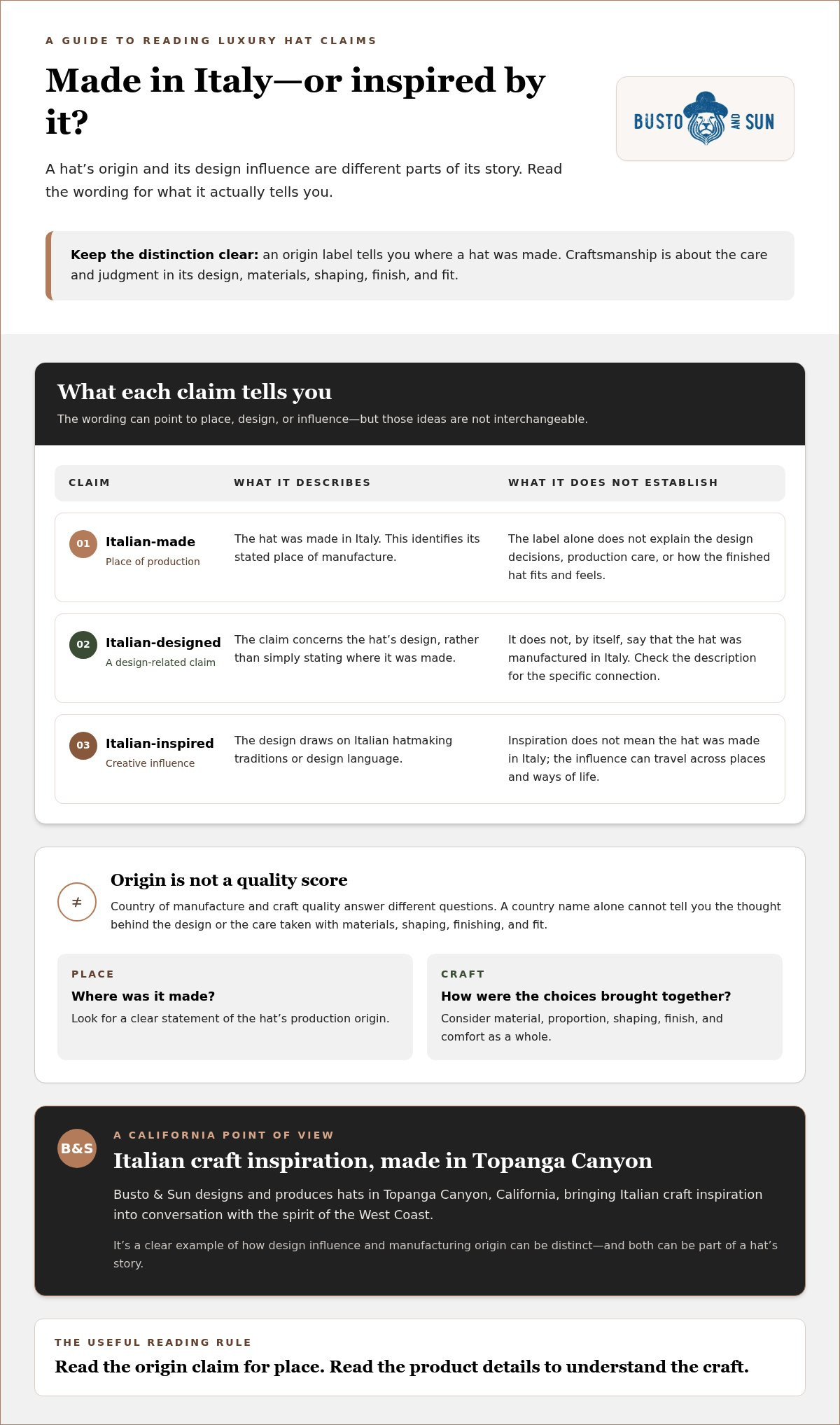
A phrase like “Italian craftsmanship” can point to place, design, or creative influence. Those connections can overlap, but they aren’t interchangeable. Reading the language carefully helps you understand a hat’s story without assuming Italian inspiration means Italian manufacture, or that one origin automatically means better quality.
| Term | What it describes | What it helps you understand |
|---|---|---|
| Italian-made | The hat was made in Italy. | Its stated place of production. |
| Italian-designed | The design work took place in Italy. | Where the design was developed, which may differ from where the hat was made. |
| Italian-inspired | The design draws on Italian craft traditions or aesthetics. | A creative influence, not necessarily a production location. |
These descriptions don’t rank quality. A label alone can’t tell you how thoughtfully a hat is shaped, finished, or fitted. Look for clear language that distinguishes design from production and explains the influence being referenced. For luxury italian craftsmanship hats, that clarity gives you a grounded way to appreciate both the heritage and the hat itself.
What each claim tells you
“Italian-made” describes where production happened. “Italian-designed” identifies where the design work took place, while “Italian-inspired” describes a connection to a visual or craft tradition. These distinctions help you understand a product’s origin and creative lineage without treating any phrase as a guarantee of quality.
A hat doesn’t have to be made in Italy to show respect for Italian craft traditions. That respect can be expressed through careful choices, an informed design point of view, and honest storytelling about where the work takes place. The key is to describe the connection accurately, not to let inspiration stand in for origin.
A California setting with a heritage-minded point of view
Busto & Sun designs and produces its hats in Topanga Canyon, California. The brand brings Italian craft inspiration into a California lifestyle shaped by freedom, individuality, and a close relationship with the landscape. That’s a distinct point of view, not a claim of Italian manufacture. For Los Angeles shoppers, Topanga Canyon is the local setting behind that blend of influences.
Heritage and place can meet without becoming the same thing. A hat may draw on traditions of proportion and restraint while expressing the character of where it is made and worn. The article on Italian and American hat styles explores how design traditions can differ. Read the distinction as context, not a contest: the most meaningful hat is one whose origin, influence, and design are described with care.
How to Assess a Luxury Hat Before You Buy
A thoughtful choice starts with your life, not a trend. Before comparing luxury italian craftsmanship hats, picture where you’ll wear yours: on everyday outings, under the sun, or for a particular occasion. That context helps narrow the silhouette, brim, and level of formality, so the hat feels like a natural part of your wardrobe.
- Define its purpose. Consider how often you’ll wear it, the setting, and the weather you expect to encounter.
- Choose a silhouette. Think about crown height and brim width in relation to your style and the impression you want.
- Review product details. Look for clear descriptions and photographs that show the hat from multiple angles.
- Assess fit. Use your head measurement and the maker’s sizing guidance; comfort matters as much as appearance.
- Consider personalization. Decide whether a ready-to-wear design suits you or whether you’d like to shape a more individual version.
Match the silhouette to your style and setting
Ask yourself where the hat will travel with you and what you’ll wear it with. A broader brim creates a more pronounced profile and may suit time spent outdoors, while a narrower brim can feel understated or easier to pair with certain outfits. Crown proportions also change the hat’s character. There’s no universally best silhouette; look for one that feels balanced on you and belongs in the places you’ll wear it.
Choose ready-to-wear or a personalized design
Ready-to-wear can be a natural fit if you already know the silhouette and fit you prefer. If you want a design shaped around your taste, Busto & Sun’s online hat quiz and in-person appointment offer ways to begin personalizing one. A useful hat-size guide can help you take the first step toward a comfortable fit, while a custom-made hat commissioning guide can clarify the choices involved in creating a personal design.
Ask yourself: Where will I wear it, how should it feel, and do the design and details suit my style? Online, use product photography to examine the crown, brim, and visible finish from different angles. Read the description for information about fit and design, and check that the images and words give you a consistent picture of the hat. If you’d like a personalized design, begin with Busto & Sun’s hat quiz.
Busto & Sun: Italian Craft Inspiration, Made in Topanga Canyon
Italian craft traditions can travel through ideas, proportions, and care for the finished design. At Busto & Sun, that heritage meets a different landscape: the brand designs and produces its handcrafted hats in Topanga Canyon, California. The result is not a claim of Italian manufacture, but a meeting of Italian craft inspiration and a California way of seeing the world.
A hat shaped by craft, place, and personal character
Topanga Canyon gives the brand a home rooted in California’s free-spirited lifestyle. Here, heritage can inform thoughtful design while the surrounding place encourages individuality and a sense of ease. A hat can reflect both: a considered point of view and the person who chooses to wear it.
Busto & Sun offers ready-to-wear designs, including the Busto Signature Topanga Hat, alongside the Custom Made Hat. Each offers a different path to personal style. A signature design gives you a ready-made starting point; a custom hat lets you bring your preferences into the process. The aim isn’t to follow a formula, but to find a hat that feels at home in your wardrobe and becomes part of your own story over time.
That’s one way to think about luxury italian craftsmanship hats: as pieces whose meaning comes not only from heritage, but also from the care and point of view behind the design. Place matters, too. Knowing a hat is made in Topanga Canyon helps you understand the California perspective that accompanies its Italian craft inspiration.
Begin your own custom hat journey
Personalization begins with your preferences: the silhouette you’re drawn to, how you expect to wear the hat, and what you want it to express. Busto & Sun’s online hat quiz and in-person appointment are ways to begin exploring a custom design. The process is shaped around the wearer, bringing a maker’s perspective together with your own sense of style.
A thoughtful hat can hold more than its shape. It can carry the feeling of a place, the memory of a day outdoors, or a detail that feels distinctly yours. If you’re ready to explore a design that brings heritage and California character together, begin your custom-hat journey with Busto & Sun.
Choose a Hat with Craft and Character
The difference in luxury italian craftsmanship hats isn’t simply where a hat is made. It’s the thought carried through its proportions, materials, finish, and fit, alongside a clear understanding of whether a claim describes origin or inspiration. Looking closely at those details helps you choose a hat that feels right for your life, not just compelling in a product photo.
Busto & Sun brings Italian craft inspiration together with a California point of view. Its hats are designed and produced in Topanga Canyon, with ready-to-wear signature designs and custom-made options. If you’re drawn to a personal fit and expression, an online hat quiz or in-person appointment can help you begin shaping a design around your preferences.
A well-chosen hat becomes part of the places you go and the moments you carry with you. Explore handcrafted hats shaped by Italian inspiration and California spirit, and find a design that feels like your own.
Frequently Asked Questions
What makes a hat luxury?
A luxury hat brings design, material choices, shaping, finish, and fit together with intention. Its appeal isn’t just a high-end label or decorative detail; the hat should feel cohesive, comfortable, and suited to the way you’ll wear it. Consider how the silhouette sits, whether the details look carefully finished, and whether the product description explains what makes the design distinctive. Thoughtful choices give a hat character beyond its first impression.
Does Italian craftsmanship mean a hat is made in Italy?
No. Italian craftsmanship can refer to a design tradition or creative influence, while “made in Italy” describes where a hat was produced. Read product descriptions for clear language about both origin and inspiration. A hat made elsewhere can draw on Italian design values, and an Italian origin label alone doesn’t establish quality. For luxury italian craftsmanship hats, understanding this distinction helps you assess the product’s story without confusing heritage with manufacturing location.
How can I tell if a hat is well made?
Look for a composed shape, consistent visible finishing, and clear information about fit and design. If shopping online, examine product photos from several angles, including the crown, brim, edges, and interior where shown. A description should give you a useful sense of the hat’s intended style and fit. When possible, try it on: it should feel comfortable and sit securely without pressure. No single detail proves quality, so consider the whole hat.
Are handmade hats better than mass-produced hats?
Not automatically. Handmade describes how an item is made, but it doesn’t by itself guarantee comfort, quality, or a design you’ll enjoy wearing. Evaluate the finished hat: its fit, proportions, visible details, and how clearly the maker describes its construction and purpose. Production method is one part of the story; thoughtful execution matters too. Choose the hat that suits your needs and preferences rather than relying on “handmade” as the only quality signal.
Can I personalize a luxury hat?
Yes. Busto & Sun offers custom-made designs, with an online hat quiz and in-person appointments as ways to begin personalization. Think about the silhouette you like, where you plan to wear the hat, and what you want it to express. These preferences help shape a design around your individual style. For Los Angeles customers, Busto & Sun designs and produces its hats in nearby Topanga Canyon.
Are Busto & Sun hats made in Italy?
No. Busto & Sun designs and produces its handcrafted hats in Topanga Canyon, California. The brand draws inspiration from Italian craftsmanship while bringing that influence into a California lifestyle perspective. Italian inspiration describes a design connection, not the hats’ place of manufacture. This distinction lets you appreciate the heritage behind the creative point of view while understanding where the hats are made.
How do I choose the right hat size?
Measure around your head where a hat naturally sits, typically just above your ears and across the middle of your forehead, then compare the measurement with the maker’s sizing guide. Keep the tape comfortably snug, not tight. If you’re between sizes, follow the brand’s fit guidance rather than guessing. A well-fitting hat should feel secure without pinching or shifting easily. For a custom design, fit can be part of the personalization conversation.